
Lappi

Mail from small villages of the Finland's Lappi region. I've compiled the items under each village's current municipality or city. There have been a lot of changes during the last two decades as cost-efficiency challenges have driven municipalities to merge into bigger units. The current municipalities are: Enontekiö, Inari, Kemi, Kemijärvi, Keminmaa, Kittilä, Kolari, Muonio, Pelkosenniemi, Pello, Posio, Ranua, Rovaniemi, Salla, Savukoski, Simo, Sodankylä, Tervola, Tornio, Utsjoki and Ylitornio. Then we have also the former municipality of Petsamo that was ceded to Soviet Union in 1944. Also parts of the municipality of Salla were ceded as well in 1940. Historical mail from these parts of the then-Finland is included here.
Enontekiö
Population: <2000

Inari
Population: ~7000

Also note the former Inari municipality's area Jäniskosken voimalaitos which is covered in detail in World War II Ceded areas section.
Kemi
Population: ~19000

Keminmaa
Population: ~7000

Kittilä
Population: ~7000

Kolari
Population: ~4000

Muonio
Population: ~2000

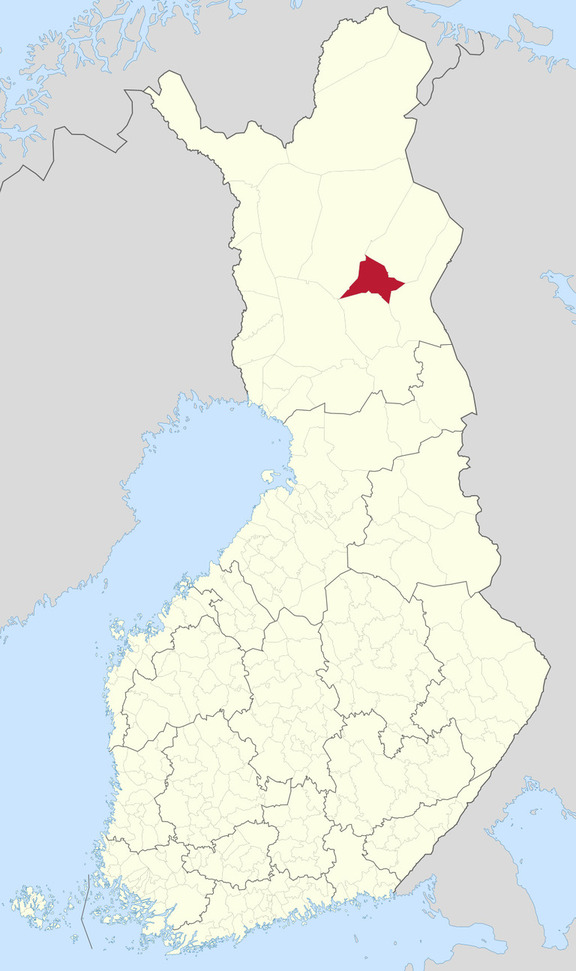
Pelkosenniemi
Population: <1000

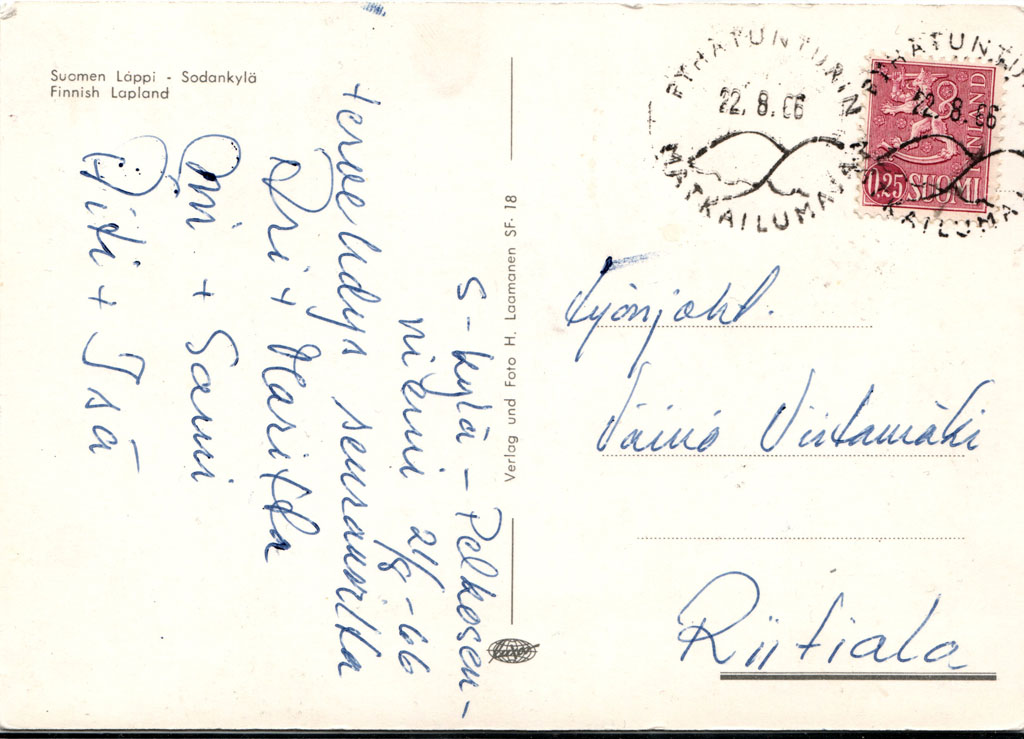
Pyhätunturin matkailumaja
Pyhätunturin matkailumaja was a very small tourist centre serving tourists visiting the Pyhätunturi National Park. It was later replaced by a much bigger tourist centre in a more convenient location. The national park was established in 1938 and was significantly expanded in 2005. It's current name is Pyhä-Luosto National Park. Mail from the original tourist centre was redirected via the Pyhäjärvi village to either Kemijärvi city or Pelkosenniemi; exact routing dates are not known. The specific image stamp was only in use between 1.6.1965 and 1.5.1970 making it not very common.
Below is a domestic postcard from the tourist centre to the village of Riitiala (in Pirkanmaa region).
Pello
Population: ~3000

Posio
Population: ~3000

Kemijärvi
Population: ~7000

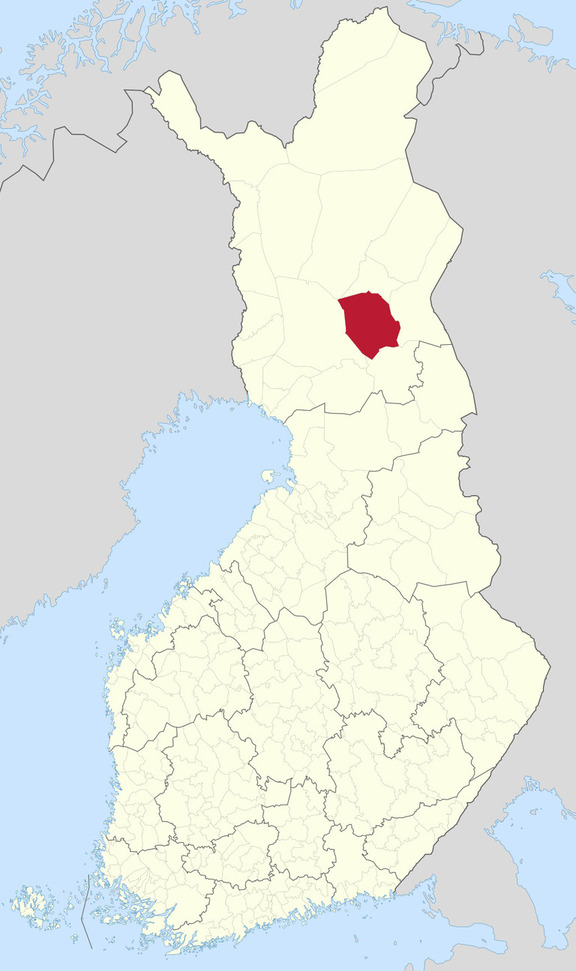
Joutsijärvi
Joutsijärvi is a small village about 30 kilometres from Kemijärvi city towards Salla and Kuusamo. The village was founded along the river banks of Käsmänjoki-river and it currently (2025) has about 90 inhabitants. The village swells somewhat during the summer time as the area has many summer cottages. The village has some historic significance as it houses a memorial statue of the Mäntyvaara Battle. The battle was a 4-hour long firefight against Soviet and Finnish battallions in the Winter War that took place in 20th of December 1939. Finns eventually won the battle gaining a significant loot from the fleeing and destroyed Soviet troops. Moreover, this battle turned out to have major impact in the big picture of the war.
Joutsijärvi also contains a restored bunker museum of the so called Salpalinja. Salpalinja was a major Finnish feat ordered by War Marshal Mannerheim in 1940 to build a 1200-kilometre long set of over 700 fortresses and adjoining bunkers along the Finnish and Soviet border between 1940 and 1941 when a fragile peace was in effect between the two warring countries. The building project was - and still is - the biggest ever construction project in the history of Finland manning up to 35000 builders and thousands of support personnel. The fortification eventually had little physical meaning during the following Continuation War (1941 - 1944) but it had a major impact to Finnish morale and probably also was a deterrant against further Soviet invasion plans. The fortresses ended up costing almost 5% of the entire budget of Finland in 1941 although Sweden donated significant amount of monetary and personnel assistance to advance the feat.
Mail stop was established in 1.10.1908. A post office established in 1.12.1940. Postal functions removed 3.8.1991. The below postal stationery card from Joutsijärvi to Vaasa sent 15.1.1911 shows the mail stop cancellation. The modern city of Vaasa (then Waasa) was officially called Nikolainkaupunki (1855 - 1917; literally translated as Nikolai's City) derived from the Russian tsar Nikolai I. Most Finns passively rebelled against Russian oppression - which included re-naming locations from their traditional names - by using the original names when writing correspondence.

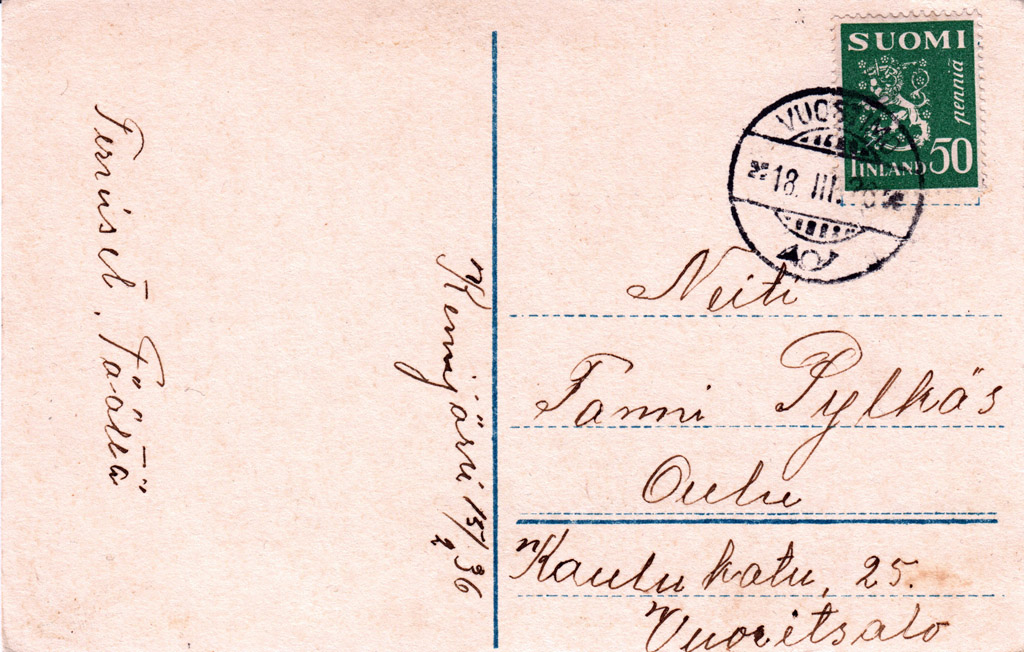
Vuostimo
Vuostimo is a tiny village within the confines of the city of Kemijärvi in northern Finland. Vuostimo is the most northern of Kemijärvi's villages about 40 kilometres north of the city. The village is located just east of Pyhä-Luosto National Park and it's main habitats are located alongside the Sodankylä-Kemijärvi road in clusters of few houses and limited in the east by Raudastenpudas river.
The village has remained small and secluded having a current (2025) population of just over one hundred inhabitants. Reindeer provide a livelihood to many of the inhabitants of the village in some form or other. In fact, the village's name, Vuostimo, is an ancient local term of the adult female reindeer (called "vaadin" in modern Finnish language and ultimately derived from Sámi languages of the Fenno-Scandic native peoples).
Here is a Google Maps link to the approximate location of Vuostimo.
Vuostimo received it's mail stop rights in 1.7.1914. It received it's own post office in 1.3.1930 but the small size of the village meant that the postmark was revoked already in 1.3.1950. Below is a greeting card with a clear cancellation 18.3.1936 and franked with a single 50 penniä M1930 definitive series stamp. Mailed as printed matter. Correct rate as per these rules.
Ranua
Population: ~3500

Rovaniemi
Population: ~65000. Rovaniemi is the capital city of the region.

Salla
Population: ~3000. Included here - but discounted from the municipality's current population - are the villages Kuolajärvi, Kurtti, Lampela, Sallan latva, Sovajärvi, Tuutijärvi and Vuorikylä that were ceded to Soviet Union in 1940. There were other villages as well but these listed had either mail stops or post offices.

Savukoski
Population: <1000
The villages and conurbations of Savukoski with historic mail stop or post offices are: Kiurujärvi, Kuosku, Lunkkaus, Martinkylä (later Martti), Nousu, Ruuvaoja, Savukoski, Tanhua and Värriö.


Lunkkaus
Lunkkaus is an extremely small village in the Savukoski municipality about 10 kilometres west of Savukoski town. The habitation centers on both sides of the Pelkosenniemi road in about a dozen houses. The latest census report (2023) reveals that the village has only 31 inhabitants. It has never been anything but a small village and the village's history doesn't extend much beyond the World War II. Aerial maps since the 1950's reveal that the area hasn't had any significant changes in half a century. Most of the houses are in clusters of few houses and many are set deep in the wilderness of spruce forests accessible by service roads. Albeit the village is small, there are a few dozen summer cottages and while the village doesn't have any services available, it isn't that far to Savukoski.
The village got it's mail stop in 1.3.1947. It was then promoted to a post office in 1.11.1967. And finally postal services were shut down 1.1.1991. The below cover was sent from Lunkkaus to Helsinki in 26.11.1950 via the city of Kemijärvi. The mail stop cancellation is quite clear. The postal rate for letters was 20 marks at the time so this has a correct rate.
Here is a Google Maps link to the approximate location of the village proper.

Nousu
Extremely small village about 10 kilometres south-east of Savukoski. The village is mostly contained between the north banks of Tenniöjoki-river and south of Sallantie-road that connects Savukoski and Salla towns. The village today is home to less than 150 inhabitants but many of those are actually located in the nearby village of Saija. These two nearby villages are today contained within a single zip-code and thus more detailed information about who lives in which village is not publicly available. Safe to say that the village doesn't have more than 100 people (which is also kind of obvious if one would click the below map link and observe the number of houses present). There are no services left in the village. Most of the village buildings are built after the World War II ended in 1945.
Nousu got it's mail stop in 1.1.1948 and a post office in 1.10.1957. All postal services ceased in 1.8.1986. The below cover from Nousu to Helsinki dated 18.12.1950 has the Nousu mail stop cancellation and was sent to Kemijärvi for further processing. The commemorative stamp of president J.K.Paasikivi's 80th birthday was issued in 27.11.1950.
Here is Google Maps link to the village.

Simo
Population: ~3000
The villages and conurbations of Simo with historic mail stop or post offices are: Simojoki (later Alaniemi), Filpus, Kuuselanmäki, Maksniemi, Simoniemi (later Simo), Simo as (later Simo), Soikko, Viantie, Vilmi, Ylikärppä and Ylimartimo.

Sodankylä
Population: ~8000

Tervola
Population: ~3000
The villages and conurbations of Tervola with historic mail stop or post offices are: Kähkönen (later Koivu), Kätkävaara, Loue, Paakkola, Palokivalo, Pesola, Peura, Tervola, Tervola as (later Kaisajoki), Varejoki, Yli-Paakkola.

Tornio
Population: ~20000
The villages and conurbations of Tornio with historic mail stop or post offices are: Aapajoki, Alatornio, Alavojakkala, Ali-Vojakkala, Arpela, Kaakamo, Kantojärvi, Karunki, Kiviranta, Kokkokangas, Korpikylä, Kourilehti, Kukkola, Kuusiluoto, Kyläjoki, Könölä, Laivajärvi, Longinpää, Näätsaari, Pirkkiö, Puuluoto, Röyttä, Sattajärvi, Tilja, Tornå (later Tornio), Tornio leirintä, Vojakkala and Yliliakka. Also, a travelling post office Autopostitoimisto 4 operated in Tornio.

Utsjoki
Population: ~1000
The villages and conurbations of Utsjoki (with historic mail stops or post offices) are: Karigasniemi, Nuorgam, Nuvvus, Outakoski and Utsjoen kirkonkylä. There's not a single city in the municipality.

Ylitornio
Population: ~4000
The villages and conurbations of Ylitornio (with historic mail stops or post offices) are: Aavasaksa, Aavasaksanvaara, Armassaari, Etelä-Portimojärvi, Hosio, Iso-Lohijärvi (also Lohijärvi), Kainuunkylä, Kantomaanpää, Kapusta, Kaulinranta (also Kauliranta), Raanujärvi (later Kivilompolo), Martimo, Mellakoski, Meltosjärvi, Nuotioranta, Pekanpää, Pessalompolo, Portimojärvi, Rahtula (later Kuivakangas), Romakkaniemi, Törmäsjärvi, Öfvertorneå (later Ylitornio),

Petsamo
Part of Finland between 1920 and 1944. Some small parts were ceded to Soviet Union in 1940 and the rest in 1944. The municipality's population was around 5000 in 1939. The villages with mail stops or post offices were: Höyhenjärvi, Kervanto, Kolosjoki, Kolttaköngäs, Kuotsjärvi, Liinahamari, Maattivuono, Menikka, Nautsi, Paatsjoen pitkäjärvi, Parkkina, Petsamo, Petsamon yläluostari, Pummanki, Salmijärvi, Trifoona and Vaitolahti.
Finnish Post Offices in Soviet Union
There are some special cases where Finnish post offices operated inside the borders of Soviet Union for short periods of time. Kaitakoski (an area about one kilometre inside Russia from the Finnish border which houses a hydro-electric power plant and was used to regulate the flow of water to the Inarijärvi; Finnish post office operated there between 1957 and 1959), Rajakoski (an area in the former Petsamo which houses another hydro-electric power plant; Finnish post office operated there during the building of the plant between 1952 and 1956) and Tuuloma. Tuuloma is a small village in Murmansk area that had a Finnish post office between 1962 and 1965 while Imatran Voima Oy was building another hydro-electric power plant. A bus line operated during those years to deliver and pick-up Finnish mail. Also Jäniskosken voimalaitos which was another power plant inside the Soviet Union. More on this is found in the WW2 Ceded areas section.
Further notes
When dealing with mail to and from Lapland, one must always remember that during the Lapland War most of the post offices in Lapland had severe difficulties in daily operations or were not operational at all. The retreating German soldiers burned everything in their path and this also included any and all villages and cities with post offices. For this reason, mail between 1944 and 1945 is of special interest as there aren't any reliable sources that could pin-point the exact timings of when each individual post office was not able to perform it's duties.
Also, during the Winter War, parts of Petsamo, Salla and Kemijärvi were invaded and occupied by the Soviet forces which meant that post offices were not operational. The places and time periods when these were not operational or had restrictions forced upon them are better documented by philatelic literature but still incomplete. Thus mail to and from these locales dating between 1939 and 1940 is also of special interest.